
Sincerely - Off My Chest
MWM - AI Music and Creative AppsSocial
4.2270.00 Reviews
- Version
- 1.93.01
- Installs
- 100.00K
- Age Rating
- Mature 17+
Screenshots
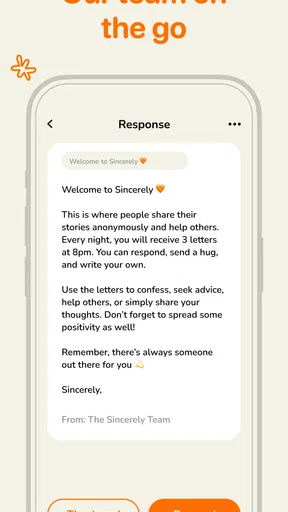
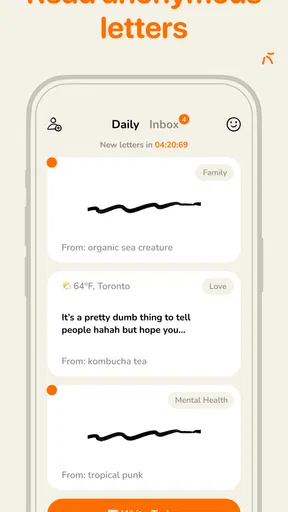
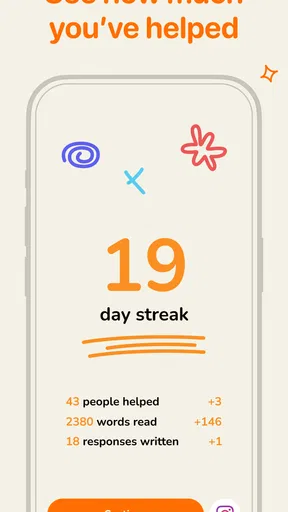
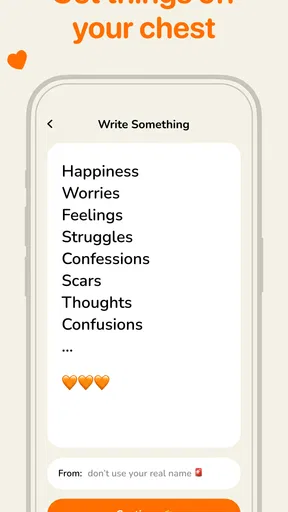
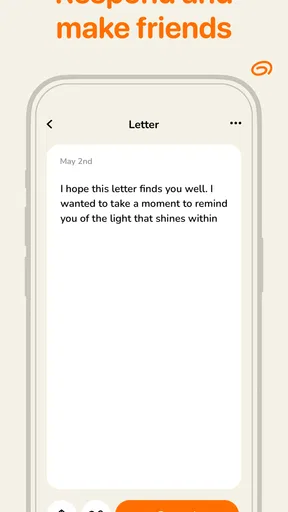
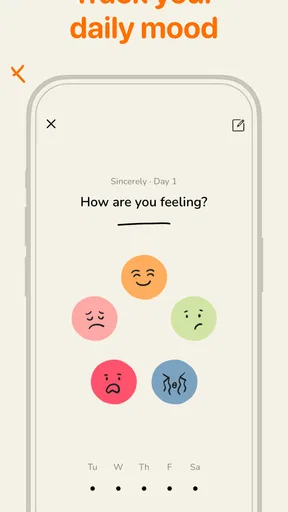
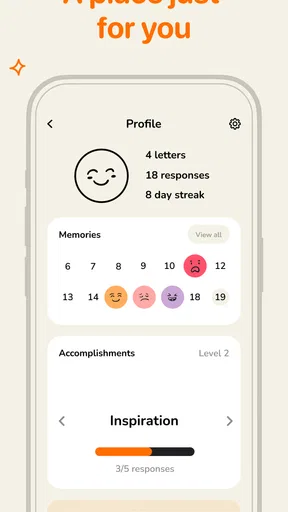
Our Review of Sincerely - Off My Chest
 Analysis by Appyee
There is something appealing about being able to say what is on your mind without attaching your name to it. Sincerely - Off My Chest is a social app built around that simple idea: reading and writing anonymous stories. I found the experience less like a conventional social feed and more like opening a window into thoughts people usually keep private. That focus gives the app a clear identity, but it also creates responsibilities and limitations that are easy to overlook before using it.
In my experience, the most important question is not whether anonymous posting sounds interesting. It is whether you want a place for honest expression without the usual pressure of a public profile. If that is what you need, this app can feel unusually direct. If you are looking for polished creator tools, dependable identity, or a fast-moving community built around known friends, a more traditional social network will probably suit you better.
Anonymous writing is the entire point
The central capability is straightforward: you can read stories written anonymously and contribute your own. That changes the tone of participation. On an ordinary social platform, even a short post is connected to a visible identity, past activity, followers, and the expectations of people who know you. Here, the emphasis moves away from personal branding and toward the words themselves.
That shift can make difficult subjects easier to approach. A person who would hesitate to discuss loneliness, embarrassment, family tension, regret, or a private worry may be more willing to write when their name is not placed beside the text. As a reader, I also found myself paying attention differently. I was not evaluating the author through a profile picture or social history; I was reacting to the situation described.
Still, anonymity is not the same as trust. It can encourage openness, but it can also remove some of the restraint people feel when their identity is visible. That is the first important trade-off. The app’s value depends on users treating anonymous writing as a way to be sincere rather than as permission to be careless.
The social category is a useful description, although this is not the kind of network I would choose for keeping up with friends. Its appeal comes from emotional distance. You can participate without building a public persona, which makes it closer to a shared collection of personal reflections than a conventional contact-based feed.
The developer is MWM - AI Music and Creative Apps, and the app is free to install. It is marked for Mature 17+ users, a detail worth taking seriously because the subject matter of anonymous stories may be more adult, personal, or emotionally intense than the tone of a general-purpose social app. I would not hand it to a younger teenager simply because the interface may look approachable.
What changes when nobody sees your name
Anonymous writing removes one familiar obstacle: the need to manage how you appear to other people. That can be liberating when the goal is to put a thought into words instead of collecting reactions from acquaintances. I think this is where the app has its strongest use. Writing can become a private release that happens to enter a shared space, rather than a performance designed for an audience that already knows you.
There is also a quieter benefit for readers. Because the author is not presented as an influencer, colleague, classmate, or celebrity, the story can feel more immediate. You may recognize an emotion without knowing anything else about the person who wrote it. That can create a sense of connection, but it is a limited kind of connection: you share a moment of understanding, not necessarily an ongoing relationship.
That distinction matters if you are deciding between this app and a messaging service. A private chat with a trusted friend offers accountability, context, and the possibility of direct support. An anonymous story offers distance and a broader audience, but it cannot guarantee that the response will be thoughtful or useful. I would use Sincerely for expression and discovery, not as my only answer to a serious personal crisis.
How I would use it in practice
The most useful workflow is to treat reading and writing as two different activities. When I read anonymous stories, I would give myself a clear limit rather than scrolling without purpose. For example, I might open the app after a difficult day, read a small selection, and notice whether the experience leaves me feeling understood or simply more weighed down. Anonymous feeds can be emotionally absorbing, so a deliberate stopping point is practical rather than restrictive.
When writing, I would draft the story mentally before opening the publishing screen. The absence of a visible name can make it tempting to include every identifying detail, but anonymity is much stronger when the text itself does not reveal who you are. I would remove workplace names, exact locations, unusual schedules, distinctive events, and details that could identify another person. This is one of the most important habits for using an anonymous social app responsibly.
A second useful habit is separating honesty from immediacy. If I were upset after an argument, I would write the first version in plain language, then reread it before sharing. That pause helps distinguish “I need to express this” from “I want strangers to validate my anger right now.” The app’s format can support reflection, but it cannot make an impulsive post thoughtful automatically.
Readers should also be careful with the role they take on. It is natural to want to comfort someone whose story feels familiar, yet an anonymous post rarely gives enough context to understand the whole situation. A short, kind response may be appropriate, while confident advice about relationships, health, money, or safety can easily go too far. I would respond to what the writer actually said and avoid pretending to know the hidden parts.
One non-obvious strength of this format is that it can help users identify recurring themes in their own thoughts. If I repeatedly write about the same worry, conflict, or decision, the pattern may become visible even when each individual story feels separate. I would use that pattern as a prompt for journaling or speaking with someone I trust, not as a substitute for professional help.
The app’s current version is 1.91.00 and it supports devices running Android 7.0 or later. That makes it accessible to people using older Android hardware, although the quality of the experience will still depend on the phone, connection, and the way the service is maintained over time. The app has passed one hundred thousand installs and holds a 4.2 average from around one and a half thousand ratings, which suggests a meaningful early audience without making the service feel like an established mainstream network.
A realistic everyday scenario
Imagine finishing a workday after a tense conversation with a colleague. You do not want to post about it under your real name because mutual contacts might recognize the situation, but keeping the feeling entirely to yourself makes it harder to process. You could write an anonymous account of what happened, remove details that identify the people involved, and read stories from others who have dealt with embarrassment or conflict.
The value in that moment is not necessarily receiving a perfect answer. It is the act of turning a vague reaction into a clear account. Writing may show you that the real issue was not the conversation itself but the fear of being judged afterward. Reading similar experiences may make the feeling less isolated. If a response is helpful, that is a bonus; the first benefit comes from organizing the thought.
I would avoid posting while still in the middle of the argument, especially if the story includes accusations. Waiting until the emotional intensity has dropped makes it easier to protect privacy and avoid wording that could hurt someone unnecessarily. Anonymous does not mean consequence-free, and a recognizable story can still affect real people.
Where it differs from familiar social apps
Compared with a standard network such as a friend-based feed, Sincerely offers less continuity and more emotional separation. You are not primarily checking updates from people you know, and you are not expected to maintain a profile that represents your life. That makes it better for thoughts you do not want attached to your everyday identity, but worse for maintaining relationships or following a trusted circle.
Compared with a public microblogging service, the app’s anonymous focus can feel less performative. There is less reason to shape a post around a personal brand, a follower count, or a carefully maintained public voice. On the other hand, public platforms often provide stronger discovery tools, richer media formats, and communities organized around specific interests. If your goal is commentary, art, news discussion, or audience growth, this is unlikely to replace them.
Compared with an anonymous forum, the difference is one of atmosphere and purpose. Forums often organize conversation around topics, technical questions, hobbies, or long-running communities. Sincerely is more personal and confessional. That can make a short story feel more emotionally focused, but it may also provide less structure for finding specialized advice. Someone seeking detailed guidance about a niche problem may be better served by a well-moderated community dedicated to that subject.
The app also differs from a private diary. A diary gives you complete control over who reads your words, while anonymous social writing places them in a shared environment. If your first priority is confidentiality, I would choose a private notes or journaling tool instead. If your priority is the possibility that another person will recognize the feeling and respond, this app has the more suitable design.
The trade-offs behind anonymous participation
The biggest weakness is built into the main feature. Because identities are hidden, it can be difficult to judge credibility, intent, or context. A moving story may be sincere, exaggerated, incomplete, or written in a moment of confusion. I would enjoy the emotional recognition while keeping a healthy distance from claims that require proof.
Moderation is especially important in an anonymous environment. Users should think about how they react to cruel, manipulative, or disturbing posts and use the app’s available reporting or safety controls when appropriate. I would not engage in a long argument with an anonymous stranger. Once a conversation becomes hostile, leaving it is usually more useful than trying to win it.
Another limitation is that anonymity can reduce accountability in replies. A supportive comment may help, but advice from an unknown person should not be treated as expert guidance simply because it sounds confident. This is particularly important for medical, legal, financial, and safety-related subjects. The app can be a starting point for reflection, not a replacement for qualified support.
There is also a risk of emotional overuse. Reading one vulnerable story can lead to another, and the feed may become a way to avoid dealing with your own situation. I would set a practical boundary: use it to name a feeling, gain perspective, or write a considered account, then step away. If the app consistently leaves you anxious, angry, or drained, that is a strong sign to reduce your time there.
The free entry point is helpful for trying the experience without an upfront payment. In-app purchases range from $7.99 to $45.99 per item, so I would inspect each purchase screen carefully and decide whether any optional spending genuinely improves the way I want to use the service. I would not pay simply because I felt pressure to participate more often. Anonymous writing should remain useful even when approached slowly and selectively.
The Mature 17+ label is another practical boundary rather than a decorative detail. Parents and younger users should not assume that an anonymous story app will stay within the tone of a family-friendly social network. Adults may still encounter content that feels upsetting or personally triggering. I would use it at a time and place where I can step away easily, rather than opening it when I am already overwhelmed.
Small habits that make the experience safer and better
First, I would write from the emotion rather than from identifying evidence. “I felt excluded during a meeting” communicates the experience without needing a company name, department, or exact date. This preserves the useful part of the story and lowers the chance that someone recognizes the people involved.
Second, I would reread replies for tone before accepting them as support. A response that sounds decisive may simply be projecting the stranger’s own experience onto yours. The most useful comment is not always the longest one; sometimes a brief acknowledgment is healthier than a detailed theory about what you should do.
Third, I would keep a separate private note for thoughts that are too sensitive to share. That two-step approach gives me the release of writing without forcing every feeling into a social space. I could later decide whether a shorter, less revealing version belongs in the anonymous feed.
Fourth, I would avoid treating the app as a popularity test. Anonymous writing works best when the goal is clarity or connection, not chasing reactions. If a story receives little response, that does not mean the feeling was unimportant. If it receives a lot of attention, that does not automatically make every reaction valuable.
Who is most likely to benefit
I think Sincerely is best for adults who want a low-pressure place to articulate personal experiences and read perspectives outside their immediate social circle. It may suit someone who is processing a change, a private disappointment, social anxiety, or a situation they are not ready to discuss openly. It can also help people who write more easily than they speak, because the format gives them time to choose their words.
It is particularly useful when the desired outcome is recognition rather than a concrete solution. Seeing that another person has felt something similar can soften the sense of being unusual or alone. That benefit is modest but real, and it is different from the practical problem-solving offered by a specialist forum or a direct conversation with a friend.
I would recommend skipping it if you need verified information, professional advice, reliable moderation around a specialized subject, or a stable group of people you know. I would also skip it during periods when anonymous emotional content tends to intensify your worries. In those circumstances, a private journal, a trusted person, or a qualified professional is a better first choice.
The app is also not ideal for someone who wants to build a recognizable online identity. There is little point in approaching anonymous stories with the goals of a creator platform. Its strength comes from reducing the importance of identity, so users who want followers, portfolio visibility, or public recognition should look elsewhere.
After trying to view it as both a writer and a reader, my opinion is positive but measured. The concept is focused, and the focus has a real effect: removing names can make difficult thoughts easier to put into words. That does not make every story reliable or every response helpful, but it creates a kind of emotional space that ordinary social feeds rarely provide.
With a 4.2 average and a growing audience, the app already has enough activity to make the idea feel social rather than purely private. Its free availability makes experimentation easy, while the Mature 17+ rating and optional paid items are reminders to use it deliberately. I would recommend it to someone who wants to express a personal thought without attaching it to their everyday identity, provided they protect their privacy and keep realistic expectations about anonymous feedback.
My final advice is simple: use the app to say something honestly, not to disappear from responsibility. Remove details that expose you or someone else, pause before publishing while upset, and treat replies as perspectives rather than answers. Used that way, anonymous storytelling can become a useful form of reflection, and this app offers a focused place to try it.
Privacy and Permissions
See what permissions an app requests and how it handles your data.
- Location
- precise location (GPS and network-based)
- Photos/Media/Files
- read the contents of your USB storage, modify or delete the contents of your USB storage
- Storage
- read the contents of your USB storage, modify or delete the contents of your USB storage
- Camera
- take pictures and videos
- Wi-Fi connection information
- view Wi-Fi connections
- Other
- view network connections, full network access, run at startup, control vibration, prevent device from sleeping, Google Play license check
Verdict
Strengths of Sincerely - Off My Chest
- Anonymous posting makes it easier to share deeply personal thoughts.
- Simple interface keeps the focus on writing and reading confessions.
- Supportive replies can help users feel heard during difficult moments.
- Posts are organized for quick browsing through different emotional topics.
- Useful outlet for journaling feelings without revealing your identity.
Limitations of Sincerely - Off My Chest
- Anonymous comments may sometimes become insensitive or judgmental.
- The app may expose users to distressing or emotionally heavy stories.
- Limited moderation can allow inappropriate or harmful content to appear.
- Some features may require an account or in-app purchases.
- It is not a substitute for professional mental health support.
Other Releases by MWM - AI Music and Creative Apps
View All
edjing Mix - Music DJ app
Music & Audio4.6

Beat Maker Pro - DJ Drum Pad
Music & Audio4.6

Piano - music & songs games
Music & Audio4.7

Guitar Tuner Pro: Music Tuning
Music & Audio4.3
Similar Picks in This Category
View All
Meta Platforms, Inc.4.6

Instagram4.0

Likee-Live, Chat & Party Games
Likeme Pte. Ltd.4.4

Facebook Lite
Meta Platforms, Inc.4.5

TikTok - Videos, Shop & LIVE
TikTok Pte. Ltd.4.0

Moj: Free Short Drama & Reels
ShareChat4.1
Frequently Asked Questions
What is Sincerely - Off My Chest?
Sincerely - Off My Chest is a space for expressing thoughts, feelings, and personal experiences in a more private and reflective way. It is designed for people who want to write about what is on their mind, release emotions, or share confessions without the pressure of a traditional social network. The app’s value depends largely on how comfortable you feel using an online platform for personal expression.
Is Sincerely - Off My Chest anonymous and private?
The app is intended to support personal and potentially anonymous expression, but users should still review its current privacy policy and account settings before posting sensitive information. Avoid including your full name, address, phone number, workplace, financial details, or anything that could identify another person. Even when an app offers anonymity, online content may be stored, moderated, reported, or exposed through screenshots.
Can I read other people’s posts or receive responses?
Sincerely - Off My Chest may allow users to browse shared thoughts and interact with posts, depending on the version and features available in your region. Reading other people’s experiences can make the app feel supportive and relatable, while responses may provide encouragement or different perspectives. However, interactions are still user-generated, so not every reply will be considerate, accurate, or suitable for emotional support.
Is Sincerely - Off My Chest a replacement for therapy or professional help?
No. An app focused on sharing feelings can be useful for journaling, emotional release, or finding relatable experiences, but it should not replace a licensed therapist, doctor, or emergency service. If you are experiencing severe distress, thoughts of self-harm, abuse, or an immediate crisis, contact local emergency services or a qualified crisis-support organization instead of relying only on posts or replies inside the app.
What should I check before downloading and using the app?
Before downloading Sincerely - Off My Chest, check the app’s latest store description, age rating, permissions, privacy policy, subscription details, and moderation rules. Confirm whether the app requires an account and how posts can be deleted. It is also worth checking recent reviews for reports about bugs, unwanted contact, advertising, or privacy concerns. Start by sharing general thoughts rather than highly sensitive personal information.
